
sales06@switek.biz

+86 186 5927 5869

Shopping

Subscrib to Us
sales06@switek.biz
+86 186 5927 5869
Shopping
Subscrib to Us

Why and How to have Two Robotic Arms Working Together in an Injection Automation System?
The injection molding automation system of which will need two top entry robotic arms working together are mostly a system of in mold insertion or assembly or packing. With two injection robotic arms working together the automation system will finish a complex process like to have one robotic arm pick the parts A from injection molding machine A and the other robotic arm have the Parts A inserted into the injection molding machine B.
What's the Ideology of SWITEK Wheel Injection Automation Solutions?
The SWITEK wheel injection automation solution is a representative solution of multi-components injection molding of which the core and the outring of the wheels are produced of different materials. The ideology of the automation system is that the core of wheels are injection molded by injection molding machine A and robot A will pick the core out and placed on the to be furtherr cooled and quality checked by the vision control system; the robotic arm B will pick the quality core and insert it into the injection molding machine B for outring injection molding and pick out the finished wheels to be placed on the conveyor.
Is there Any Other Solutions of Multi-Components Parts Injection Molding?
For multi-components injection molding the other solution is to use a two-tone injection molding machine of which the mold will switch the position for the soft-plastic injection molding after the hard plastic core injection molding.
What's the Difference Between SWITEK Two Robotic Arms Solutions and Multi-Components Injection Molding Machine Solutions?
The SWITEK two robotic arms in mold inertion system has the injection molding of the hard plastic core and the soft plastic outring of the wheel done by two injection molding machines, the system is much more complex. But with this system the core will have a better cooling and after quality checking before the soft plastic injection, it'll have a better quality control of the final products.
For sure it would be much more easier to have the injection molding of both the hard plastic core and the soft plastic outring done by the same injection molding machine, but it'll request a perfect chilling system in the mold design and in case there's any defect in the hard plastic core injection molding, a defect wheel would be produced and difficult to be find out because the core is wrapped by the soft plastic after the second injection molding.

SW6712
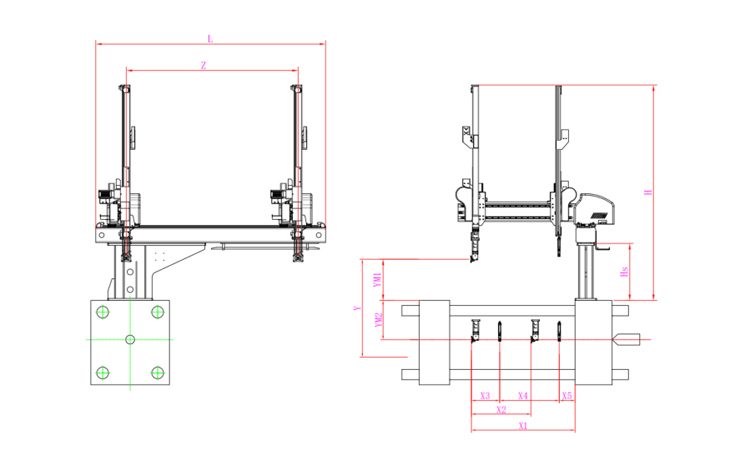
Unit: mm
| X1 | X2 | X3 | X4 | Y | YM1 | YM2 | Z | L | W | H | Payload | 1055 | 607 | 288 | 607 | 1200 | 420 | 780 | 1750 | 2340 | 1700 | 2460 | 8kg |
|---|
EOAT Assembly Demonstration -- One Cavity Instrument Panel Picking EOAT
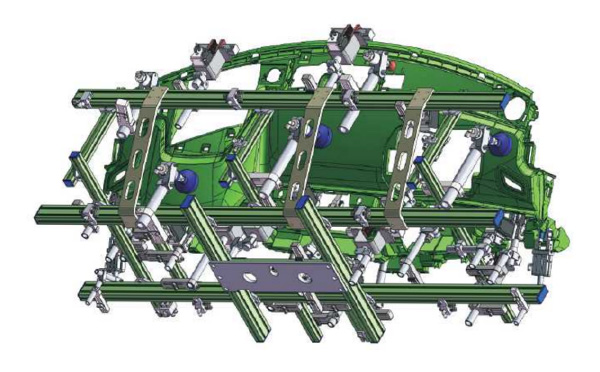
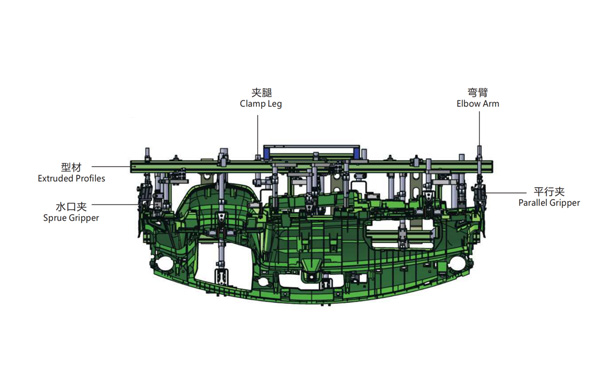
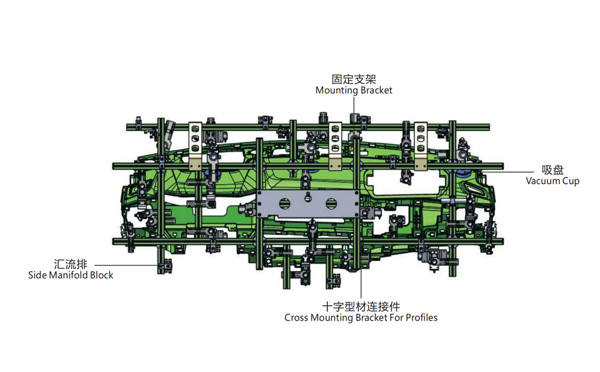
Product Descriptions
Injection Robot for Welltec 480SEIII Servo Injection molding machine


