
sales06@switek.biz

+86 186 5927 5869

Shopping

Subscrib to Us
sales06@switek.biz
+86 186 5927 5869
Shopping
Subscrib to Us

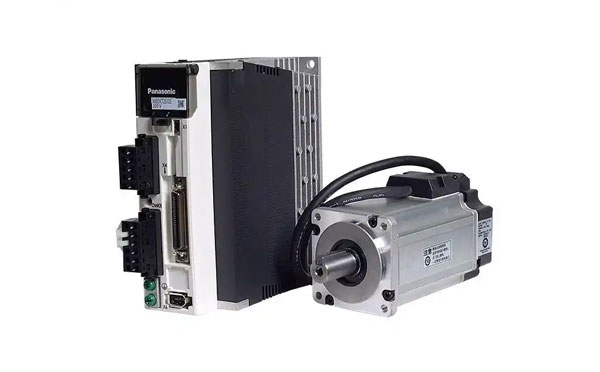
Keywords:Panasonic A6 Servo Motor, Panasonic A6 Servo Motor Driver, Panasonic A6 Servo Motor setting instruction
A routine maintenance and inspection of the driver and motor are essential for the proper and safe operation of the Panasonic A6 series motors in your injection automation system. Here in this chapter you'll have an overall idea of what's to do and not to do in the routine maintenance and inspection of the Panasonic A6 series motor and driver.
Routine maintenance and inspecdtion of the driver and motor are essential for the proper and safe operation.
Notes on Maintenance and Inspection
Inspection Items and Cycles
General and normal running condition
Ambient conditions: 30°C (annual average), load factor of 80% or lower, operating hours of 20 hours or less per day.
Perform the daily and periodical inspection as per the items below.
| Type | Cycles | Items to be Inspected |
|---|---|---|
| Daily Inspection | Cycle |
|
| Motor with Gear Reducer | Annual |
|
Note: Inspection cycle may change when the running conditions of the above change.
Guideline for Parts Replacement
Use the table below for a reference. Parts replacement cycle varies depending on the actual operating conditions. Defective parts should be replaced or repaired when any error have occurred.
 Prohibited | Disassembling for inspection and repair should be carried out only by authorized dealers or service company. |
| Product | Component | Standard Replacement Cycles (Hour) | Note |
|---|---|---|---|
| Driver | Smoothing condenser | Approx. 5 years | These hours or cycles are reference. When you experience any error, replacement is required even before this standard replacement cycle. |
| Cooling Fan | 2 to 3 years (10000 to 30000 hours) | ||
| Aluminum electrolytic capacitor (on PCB) | Approx. 5 years | ||
| Rush current preventive relay | Approx.100000 times (depending on working condition) | ||
| Rush current preventive resistor | Approx. 20000 times (depending on working condition) | ||
| Motor | Bearing | 3 to 5 years (20000 to 30000 hours) | |
| Oil seal | 5000 hours | ||
| Encoder | 3 to 5 years (20000 to 30000 hours) | ||
| Battery for absolute encoder | Life time of battery read P7-14 please |
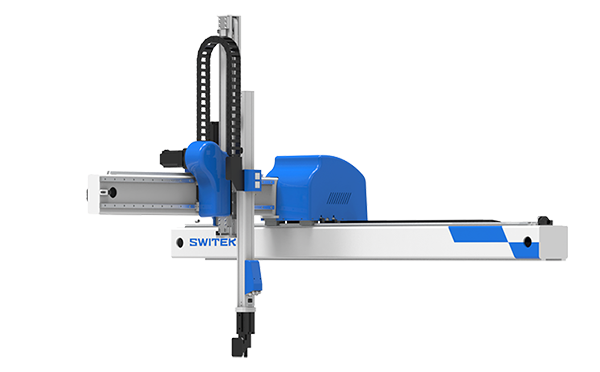
SW6715DS
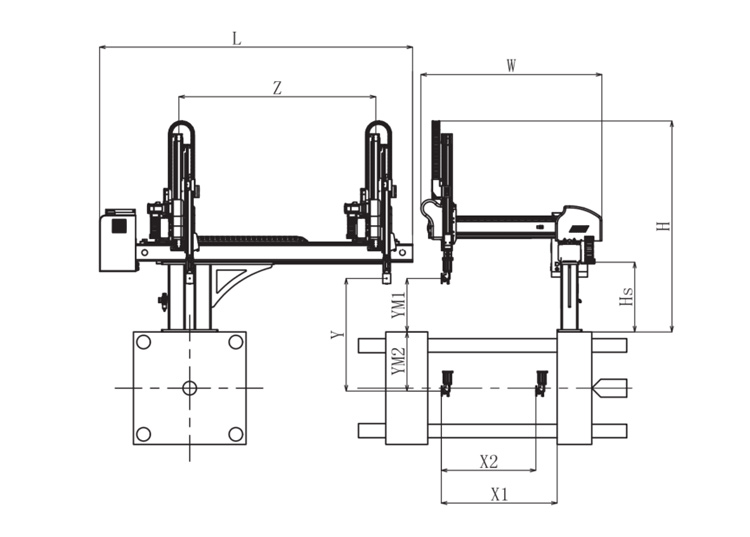
Unit: mm
| X1 | X2 | X3 | X4 | Y | YM1 | YM2 | Z | L | W | H | Payload | 1400 | 1180 | 0 | 0 | 1500 | 480 | 1020 | 2500 | 3120 | 2200 | 2400 | 15kg |
|---|
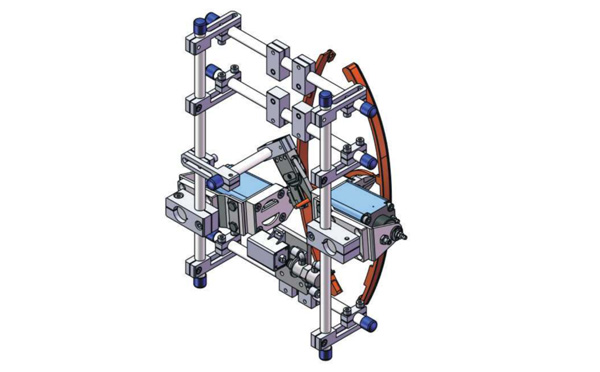
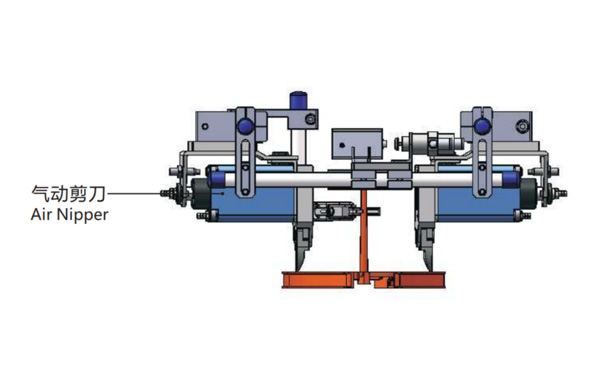
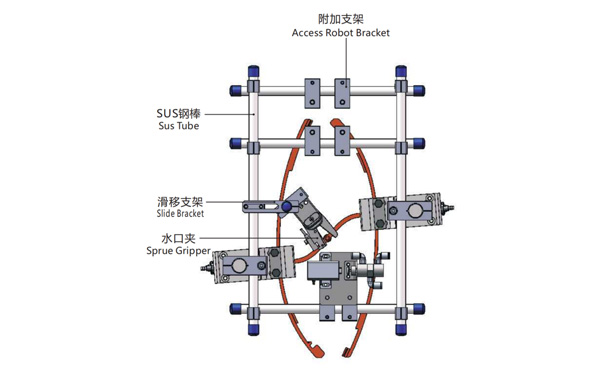
EOAT Assembly Demonstration -- Two Cavities Parts Picking EOAT with Runner Cutting by Air Nipper
Product Descriptions
Bom List
| Product Name | PN # | Model | Quantity |
|---|---|---|---|
| Sus Tube | 4.Y00021 | PST12-1500 | 2 |
| Air Nipper | 1.Y00004 | GT-NY25 | 2 |
| Straight Blades for Plastic | 1.Y00037 | NY25AJ | 2 |
| Fixing Block | 7.Y00633 | SCE2-25 | 2 |
| Tube Plugs | 1.Y03638 | PST12-1500 | 11 |
| Cross Connector | 7.Y00027 | SMBT-2012 | 2 |
| Access Robot Bracket | 7.Y00002 | SMBH1-12M6 | 6 |
| L-Type Thread Hose Fitting | 1.Y02809 | APL6-M5 | 3 |
| Slide Bracket | 7.Y00004 | SCF4-1240W16 | 7 |
| Slide Bracket | 7.Y00001 | SMBS-12T16 | 7 |
| Sprue Gripper | 8.Y00091 | GR12-12-CN | 1 |
| Cross Connector | 7.Y00020 | SMBT-1212 | 1 |
Why There's An Additional Static Charge Ring Installed to Some IML System?
For visitors of SWITEKK website will find that for the IML system no matter if it's side entry IML robot or Top Entry IML Robot, you can see a ring just outside the mold area in some of the IML system but not to the other IML system. Why would it happen and what's the function of this ring to the IML system?
The ring installed is a static charging ring. For a better understanding of the function of this static charging ring we'll need to know the types of the labels which we're using in an IML project. For an IML container made from PP (Polypropylene) there're two main types of IML labels, the regular material IML labels which could be easily static charged from the inner side of the label and the metallic label of which has a metallic layer will releas the static immediately. In this case we'll need to have the label static charged from outside of the label. That's why an extra static charging ring is to be installed to the IML system to ensure that the metallic IML label could be well static charged.
For more knowledge about IML and IML solutions just follow up https://www.gechiml.com for the up to date solutions of IML from SWITEK automation and contact Adams for a turn-key solutions of IML.


